Linebacker Drills PDF: A Comprehensive Training Guide
This guide details linebacker training, mirroring drills observed with players like Mohamed Toure, and focusing on development,
as seen with rising stars like Madden Faraimo.
Linebacker drill training is a cornerstone of defensive success in football, demanding a holistic approach to player development. This encompasses not only physical conditioning but also mental acuity and instinctive reactions. A well-structured program, often compiled into a linebacker drills PDF for easy access and implementation, is crucial for coaches at all levels.
Effective training builds upon fundamental skills – proper stance, agile footwork, secure tackling, and intelligent coverage techniques. Observing players like Mohamed Toure in practice highlights the repetitive nature of these drills, reinforcing muscle memory and technique. The rise of players like Madden Faraimo demonstrates how consistent drill work translates to improved on-field performance and increased playing time.
A comprehensive PDF resource will outline progressions, ensuring players are challenged appropriately as their skills evolve. It should also emphasize safety protocols and injury prevention, incorporating warm-up routines and proper technique instruction. Ultimately, the goal is to create linebackers who are not only physically capable but also possess the football IQ to excel in various defensive schemes.
II. Essential Equipment for Linebacker Drills

Effective linebacker drill training necessitates specific equipment to ensure safety and maximize training benefits. A comprehensive linebacker drills PDF should detail these requirements. Core essentials include tackling dummies of varying sizes and shapes, allowing players to practice form tackling repeatedly, mirroring the dedication seen in practices like those of Mohamed Toure.
Agility ladders and cones are vital for footwork and change-of-direction drills, enhancing the quickness needed for reacting to offensive plays. Resistance bands aid in building strength and explosiveness, crucial for shedding blocks and making tackles, contributing to a player’s development like Madden Faraimo’s.
Protective gear is paramount: helmets, shoulder pads, and mouthguards are non-negotiable. Additionally, consider using blocking shields for controlled contact drills. A well-maintained inventory, as outlined in a detailed PDF guide, ensures a safe and productive training environment, fostering skill development and minimizing injury risk.
III. Warm-up and Dynamic Stretching
Prior to any linebacker drill, a thorough warm-up and dynamic stretching routine is crucial for injury prevention and performance enhancement. A detailed linebacker drills PDF should emphasize this. Begin with light cardio, such as jogging or jumping jacks, to increase blood flow and muscle temperature, preparing the body for more intense activity.
Dynamic stretches, unlike static stretches, involve movement. Examples include leg swings, arm circles, torso twists, and high knees. These movements improve range of motion and flexibility, mimicking the agility required during drills observed in practices like those featuring Mohamed Toure.
Focus on movements that directly relate to linebacker actions – hip mobility, shoulder flexibility, and ankle range of motion. This prepares muscles for the demands of tackling, coverage, and blitzing, contributing to a player’s progression, similar to Madden Faraimo’s steady improvement.
III.A. Dynamic Stretching for Injury Prevention
A comprehensive linebacker drills PDF must prioritize dynamic stretching as a cornerstone of injury prevention. Unlike static stretching, dynamic movements prepare muscles for the specific demands of football, reducing the risk of strains and tears. Focus on exercises that mimic game-like actions, enhancing neuromuscular control.
Include exercises like walking lunges with a twist, inchworms, and lateral shuffles. These improve flexibility, balance, and coordination, crucial for linebackers like Mohamed Toure during practice drills. Prioritize hip mobility with exercises like leg swings and hip circles, vital for changing direction quickly.
Proper dynamic stretching increases blood flow to muscles, improving elasticity and reducing stiffness. This proactive approach, mirroring the training regimens of players like Madden Faraimo, supports sustained performance and minimizes the potential for setbacks during intense drills.
III.B. Pre-Drill Activation Exercises
A linebacker drills PDF should detail pre-drill activation exercises to prime the neuromuscular system for optimal performance. These aren’t replacements for dynamic stretching, but rather a focused preparation for the specific movements within upcoming drills. Think of it as ‘waking up’ the muscles that will be heavily engaged.
Include exercises like glute bridges, band walks (lateral and forward), and light plyometrics like jump squats. These activate key muscle groups – glutes, hamstrings, and core – essential for linebacker agility and power, mirroring the training of players observed in practice like Mohamed Toure.
Focus on controlled movements with moderate resistance. The goal isn’t fatigue, but rather heightened neural drive. This prepares the body for explosive actions, similar to the improvements seen in Madden Faraimo’s game performance, enhancing reaction time and reducing injury risk during demanding drills.
IV. Fundamental Linebacker Drills
A comprehensive linebacker drills PDF must prioritize foundational movements. These drills build the base for more complex techniques, ensuring proper form and efficient athleticism. Begin with drills focusing on stance – a balanced, athletic position ready for reaction. Incorporate short-area footwork drills, emphasizing quick steps, change of direction, and maintaining a low center of gravity.
Cone drills are invaluable for agility, simulating the cuts and movements required to navigate blockers and pursue ball carriers. Shuttle runs build lateral speed, crucial for covering ground quickly. These drills, akin to those observed in Mohamed Toure’s practice sessions, develop the core skills needed for success.
Progress gradually, focusing on technique before speed. Proper fundamentals, like those contributing to Madden Faraimo’s playing time increase, are paramount for long-term development and injury prevention.
IV.A. Stance and Starts
A linebacker drills PDF must dedicate significant attention to the foundational stance. This isn’t merely a position; it’s a coiled spring, ready for explosive reaction. The stance should be balanced, weight slightly forward, knees bent, back flat, and head up, maintaining vision of the offensive formation. Hands should be up and ready to engage, not relaxed at the sides.
Starts are the immediate response from this stance. Drills should focus on the first three steps – short, choppy, and driving forward. Variations include reacting to a coach’s signal (visual or auditory) and simulating reads. Quick, controlled starts are vital, mirroring the responsiveness seen in players like Mohamed Toure during practice.
Emphasize maintaining the proper stance throughout the start, avoiding standing up before reacting. Consistent repetition builds muscle memory and ensures a rapid, efficient first step.
IV.B. Footwork and Agility Drills
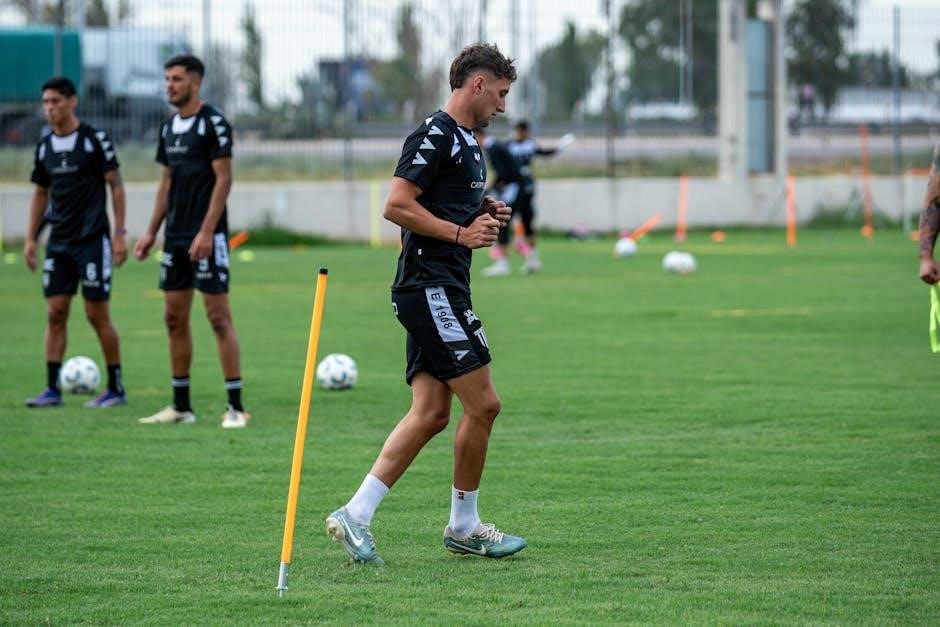
A comprehensive linebacker drills PDF will include a robust section on footwork and agility. These drills are crucial for reacting to offensive movements and covering ground efficiently. Cone drills – such as the 5-10-5 shuttle and L-drill – are staples, improving lateral quickness and change of direction.
Ladder drills enhance foot speed and coordination, forcing rapid, precise steps. Mirror drills, where a linebacker mimics an offensive player’s movements, develop reactive agility. Backpedal drills, transitioning to forward sprints, build the ability to quickly change direction while maintaining balance.
These drills aren’t just about speed; they’re about controlled movement. Like the development of Madden Faraimo, consistent practice builds the necessary athleticism for effective playmaking. Focus on maintaining a low center of gravity and proper technique throughout each drill.
V. Tackling Drills
A linebacker drills PDF must dedicate significant attention to tackling, the core of defensive success. Drills should progress from foundational form tackling to complex, game-like scenarios. Begin with “fit” drills, emphasizing proper approach angle and securing contact. Breakdowns should focus on head-up tackling, wrapping the arms, and driving through the ball carrier.
Angle tackling drills are vital, teaching linebackers to efficiently close distances and make tackles in space. Open-field tackling techniques require practice against moving targets, simulating the challenges of one-on-one situations. Emphasis should be placed on maintaining leverage and avoiding being juked.
Like the improvements seen in players during practice, such as those observed with Mohamed Toure, consistent repetition builds confidence and technique. Safety is paramount; proper instruction and controlled environments are essential.
V.A. Form Tackling Progression
A linebacker drills PDF outlining form tackling should begin with stationary drills. Players practice the tackling position – head up, eyes focused, back flat – without movement. Next, introduce partner drills, starting with a “mirror” drill where one player leads and the other mimics, focusing on footwork and body positioning.
Progression continues to tackling dummies, emphasizing wrapping up and driving through the target. Introduce a “pop” drill, where players practice delivering a forceful impact. Controlled tackling drills with a designated tackler and ball carrier follow, starting at walking speed and gradually increasing intensity.
Consistent repetition, mirroring the focused practice of players like Mohamed Toure, is key. Coaches must provide immediate feedback on technique, correcting flaws before they become ingrained. Safety is paramount; proper equipment and supervision are essential throughout the progression.
V.B. Angle Tackling Drills
A comprehensive linebacker drills PDF must include angle tackling, crucial for open-field stops. Drills begin with cone setups, simulating a ball carrier running towards the sideline. Linebackers practice taking the correct angle – neither too wide nor too narrow – to cut off the runner.
Introduce a “triangle drill,” where the linebacker, ball carrier, and coach form a triangle. The coach directs the ball carrier, forcing the linebacker to adjust their angle on the fly. Progression involves increasing speed and adding a second defender to create a box, demanding quicker decision-making.
Emphasize maintaining proper form while changing direction, mirroring the agility needed for players like Madden Faraimo. Coaches should stress the importance of breaking down and delivering a secure tackle upon arrival, preventing the runner from escaping. Consistent repetition builds muscle memory and improves tackling efficiency.
V.C. Open-Field Tackling Techniques
A linebacker drills PDF focusing on open-field tackling requires drills simulating one-on-one situations. Start with a stationary drill, emphasizing proper approach angle, head-up targeting, and wrapping up. Progress to moving drills, where the linebacker tracks a ball carrier across the field.
Introduce “breakdown drills,” forcing linebackers to decelerate quickly and maintain balance before engaging. Coaches should emphasize keeping the head up, eyes on the target, and avoiding diving. Drills should incorporate variations – ball carrier changing direction, juking, or accelerating – to challenge the linebacker’s reaction time.
Like Mohamed Toure’s practice, focus on form tackling. Reinforce the importance of driving through the tackle, not just making contact. This builds confidence and reduces the risk of missed tackles, mirroring the defensive improvements seen in players like Faraimo.
VI. Coverage Drills
A linebacker drills PDF must include comprehensive coverage training. These drills develop the ability to effectively cover receivers and tight ends in pass coverage. Begin with mirroring drills, where linebackers match the movements of a receiver, focusing on maintaining proper spacing and technique.
Zone coverage drills emphasize reading the quarterback’s eyes and reacting to route combinations. Linebackers practice dropping into their zones, identifying potential threats, and intercepting passes. Man coverage drills require linebackers to stay tight on their assigned receiver, disrupting passing lanes.
Drills should simulate game-like scenarios, incorporating play-action and quick passes. Like observing practice, focus on quick transitions and efficient backpedaling. Developing these skills, as seen in successful defenses, is crucial for linebacker effectiveness.
VI.A. Zone Coverage Drops and Reads
A linebacker drills PDF focusing on zone coverage must detail proper drop techniques. Drills begin with designated drop points, emphasizing consistent depth and maintaining spatial awareness within the zone. Linebackers practice shuffling laterally, keeping their eyes on the quarterback while covering their assigned area.
Reading the quarterback’s progression is paramount. Drills involve recognizing key indicators – head fakes, eye movements, and body language – to anticipate throws. Coaches should simulate various passing scenarios, forcing linebackers to react quickly and decisively.
Emphasis should be placed on communication with teammates, ensuring seamless zone transitions and preventing coverage breakdowns. These drills, mirroring game situations, build instincts and improve reaction time, vital for effective zone coverage.
VI.B. Man Coverage Techniques
A linebacker drills PDF dedicated to man coverage requires drills focusing on mirroring receiver movements. Linebackers practice staying hip-to-hip with their assigned target, maintaining a proper backpedal and quick transition to burst forward. Emphasis is placed on jamming at the line of scrimmage, disrupting the receiver’s route.
Drills should incorporate various route concepts – slants, outs, curls – forcing linebackers to react to different cuts and changes in direction. Footwork and agility are crucial; cone drills and shuttle runs enhance these skills. Recognizing route stems and anticipating breaks are key components.
Maintaining visual focus on the receiver while avoiding looking back at the quarterback is vital. These drills, demanding precision and athleticism, prepare linebackers for tight man-to-man assignments.
VII. Blitzing and Pass Rush Drills
A linebacker drills PDF outlining blitzing techniques must prioritize timing and execution. Drills begin with simulated pressures, focusing on the linebacker’s initial burst and path to the quarterback. Emphasis is placed on recognizing blocking schemes and exploiting vulnerabilities.
Pass rush moves, such as rip moves, swim moves, and bull rushes, are incorporated to defeat offensive linemen. Linebackers practice hand placement, footwork, and leverage to create pressure. Drills should include variations – delayed blitzes, zone blitzes – to enhance versatility.
Reaction drills, responding to quarterback movements and potential throws, are essential. These drills build instincts and improve the linebacker’s ability to disrupt passing plays, mirroring the aggressive approach needed for effective pressure.
VII.A. Blitz Timing and Execution
A comprehensive linebacker drills PDF dedicates significant attention to blitz timing. Drills start with simple A-gap blitzes, emphasizing the snap count and first step quickness. Linebackers practice coordinating their rush with defensive line movements, creating confusion for the offense.

Progression drills involve recognizing pre-snap reads – offensive line tendencies, receiver alignments – to anticipate blitz opportunities. Emphasis is on delayed blitzes, where the linebacker hesitates before rushing, disrupting blocking assignments.
Timing is refined through repetition, focusing on hitting the designated gap at the precise moment. Coaches provide feedback on acceleration, angle of approach, and maintaining speed through contact. Successful execution relies on precise timing and relentless pursuit, mirroring game-like scenarios.
VII;B. Pass Rush Moves for Linebackers
A detailed linebacker drills PDF outlines pass rush techniques beyond sheer speed; Drills begin with the swim move, teaching linebackers to disengage from blockers with a quick arm extension. Rip moves, utilizing a forceful inside rip, are practiced to exploit leverage.
Bull rushes, though less common for linebackers, are introduced for short-yardage situations, emphasizing power and hand placement. Spin moves are taught to create separation by turning underneath blockers. Combination drills involve chaining moves together – swim-rip, rip-spin – to keep offensive linemen guessing.
Footwork drills enhance agility and the ability to change direction quickly. Coaches emphasize hand fighting and maintaining a low center of gravity. Effective pass rushing requires a diverse skillset and relentless effort, mirroring techniques used by successful players.
VIII. Reaction and Recognition Drills
A comprehensive linebacker drills PDF prioritizes quick decision-making. These drills focus on reading offensive formations and identifying run-pass keys. Mirror drills involve linebackers reacting to quarterback’s eyes and body language, simulating pass route recognition.
“Key and diagnose” drills present scenarios where linebackers must quickly identify the play based on guard and tackle movements. Shuffle drills improve lateral agility and the ability to react to changing play directions. Film study is integrated, requiring linebackers to analyze opponent tendencies.
Coaches utilize visual cues and verbal commands to test reaction time. Drills progressively increase in complexity, adding multiple reads and distractions. Successful linebackers possess exceptional instincts and the ability to process information rapidly, mirroring the skills of players like Faraimo.
IX. Position-Specific Drills (Middle, Outside, Weakside)
A detailed linebacker drills PDF must address the unique demands of each position. Middle linebacker drills emphasize run stopping, gap control, and communication – vital for directing the defense. Outside linebacker drills focus on pass rush techniques, edge containment, and coverage responsibilities.
Weakside linebacker drills prioritize speed, agility, and the ability to cover ground quickly, often requiring them to react to plays developing away from the primary action. Specific drills include blitzing angles for outside linebackers and reading offensive linemen for middle linebackers.
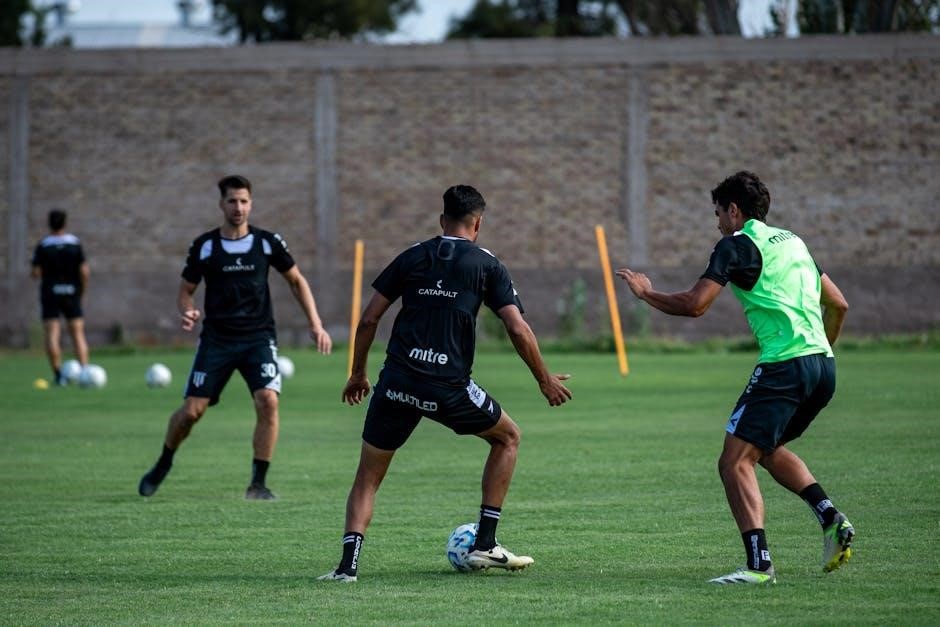
These drills often mirror the training regimens of players like Toure, adapting to individual strengths. Position-specific drills enhance a linebacker’s ability to excel within their designated role, contributing to overall defensive effectiveness.
X. Combining Drills for Game Simulation
A comprehensive linebacker drills PDF should culminate in drills that simulate game scenarios. This involves seamlessly blending tackling, coverage, and blitzing drills into complex sequences. For example, a drill might start with a pass rush, transition into a run stop, and conclude with a coverage assignment.
These combined drills demand quick decision-making, adaptability, and communication – mirroring the unpredictable nature of a football game. Observing players like Faraimo’s development highlights the importance of consistent, game-like practice.

Incorporating offensive formations and play calls further enhances realism. The goal is to create drills that challenge linebackers to react instinctively and execute their responsibilities under pressure, preparing them for the intensity of live competition.
XI. Cool-down and Static Stretching
A well-structured linebacker drills PDF must emphasize the importance of cool-down routines and static stretching. Following intense drills, a gradual cool-down period is crucial for reducing muscle soreness and preventing injuries. This phase should involve light cardio, such as jogging or walking, to promote blood flow.
Static stretching, holding each stretch for 20-30 seconds, targets major muscle groups used during linebacker drills – hamstrings, quads, groin, and shoulders. Proper stretching improves flexibility, range of motion, and overall recovery.
Just as focused training builds performance, dedicated recovery is essential. Consistent cool-down and stretching routines, like those used by athletes observed in practice (e;g., Toure), contribute to long-term athletic health and sustained performance.
XII. Utilizing PDF Resources for Drill Implementation
A comprehensive linebacker drills PDF serves as a valuable coaching tool, enabling organized and effective training sessions. Digital resources allow for easy access, modification, and distribution of drills to players. Coaches can annotate PDFs with specific notes tailored to individual athlete needs, enhancing personalized development.
PDFs facilitate consistent drill execution, ensuring all players understand proper technique and form. They can include diagrams, video links (via QR codes), and detailed instructions, mirroring the detailed observation of players like Toure during practice.
Effective implementation requires coaches to regularly review and update the PDF, incorporating new drills and adapting existing ones based on player progress, similar to how Faraimo’s role evolved with focused training.