Edelweiss PDF: A Comprehensive Guide
Edelweiss PDF resources, as of September 1st, 2026, frequently detail cultivation, history, and symbolism.
Information is sourced from sites like 7dach.ru and logoslab.ru,
often including images and discussions on alpine species nutrition.
Edelweiss, a captivating alpine flower, has garnered significant attention, leading to a growing body of digital documentation often compiled into PDF formats. These resources, increasingly available as of September 1st, 2026, serve as comprehensive guides for enthusiasts, researchers, and gardeners alike. The surge in Edelweiss PDF content reflects a renewed interest in this iconic plant, fueled by its cultural significance and the challenges associated with its cultivation.
Online platforms like 7dach.ru and logoslab.ru are central repositories for this information, offering insights into the plant’s history, present-day cultivation practices, and future prospects. These PDF documents frequently incorporate high-quality images, aiding in identification and understanding of various Edelweiss species. The content often delves into the nutritional needs of Alpine Edelweiss, as highlighted by resources on logoslab.ru, and explores the broader context of its role in alpine ecosystems.
Furthermore, the availability of Edelweiss PDF guides facilitates knowledge sharing and conservation efforts, providing accessible information to a wider audience. These resources are not merely botanical guides; they often weave in cultural narratives and traditional medicinal uses, enriching our understanding of this remarkable flower.
What is an Edelweiss PDF?
An Edelweiss PDF is a digitally formatted document – typically created using Portable Document Format (PDF) technology – that compiles information about the Leontopodium genus, commonly known as Edelweiss. As of September 1st, 2026, these documents are increasingly prevalent online, serving as accessible repositories of knowledge for botanists, gardeners, and enthusiasts. Sources like 7dach.ru and logoslab.ru contribute significantly to this growing digital library.
These PDFs encompass a wide range of content, from detailed botanical classifications and species descriptions to practical guides on cultivation and conservation. They frequently include high-resolution images, aiding in plant identification, as evidenced by examples found on various websites. The information often covers topics like the Alpine Edelweiss’s nutritional requirements and its adaptation to harsh alpine environments.
An Edelweiss PDF isn’t limited to scientific data; many incorporate historical and cultural contexts, exploring the flower’s symbolism and traditional medicinal applications. They function as comprehensive resources, consolidating diverse information into a readily shareable and easily searchable format, promoting wider understanding and appreciation of this iconic alpine bloom.
Historical Significance of Edelweiss
Edelweiss PDFs, while a modern format, document a history steeped in tradition. Historically, the Edelweiss held immense significance, particularly within alpine cultures. These digital documents now preserve accounts of its use as a symbol of courage, devotion, and purity, often linked to mountaineering and military traditions. Information gleaned from sources like 7dach.ru suggests a long-standing fascination with the flower.
The flower’s rarity and the difficulty in obtaining it contributed to its romanticized status. PDF resources detail how Edelweiss was often collected as a trophy by mountaineers, signifying successful ascents. Later, it became a symbol adopted by alpine military units, representing bravery and resilience. These PDFs often include historical imagery illustrating this connection.
Furthermore, Edelweiss PDFs highlight the flower’s role in folklore and traditional medicine. While modern scientific validation is limited, these documents preserve accounts of its purported healing properties. The preservation of these historical narratives within accessible PDF formats ensures the continued understanding of the Edelweiss’s cultural importance, beyond its botanical value.

Edelweiss in Culture and Symbolism
Edelweiss PDFs frequently explore the flower’s profound cultural impact, extending far beyond its alpine origins. These documents showcase how the Edelweiss has become a potent symbol, representing a range of ideals including purity, courage, and enduring love. Sources like 7dach.ru demonstrate a continued fascination with its symbolic weight in contemporary culture.
PDF resources detail the Edelweiss’s prominent role in art, literature, and music, often embodying themes of resilience and the beauty of the natural world. It’s frequently used to represent the allure of the mountains and the spirit of adventure. The flower’s image appears in various forms, from traditional paintings to modern graphic design, as documented in these digital archives.
Moreover, Edelweiss PDFs reveal its association with national identity, particularly in alpine regions. It’s often incorporated into emblems and symbols representing regional pride. The flower’s delicate beauty, contrasted with its harsh growing environment, contributes to its symbolic power. These PDFs preserve a rich tapestry of cultural meanings, ensuring the Edelweiss’s symbolic legacy endures for future generations.
Botanical Classification of Edelweiss
Edelweiss PDFs consistently detail the flower’s taxonomic placement within the plant kingdom. These resources classify Edelweiss under the genus Leontopodium, belonging to the Asteraceae family – commonly known as the sunflower family. Documents, like those referenced from logoslab.ru, often include detailed diagrams illustrating the plant’s morphological characteristics.
PDF materials emphasize the importance of understanding the Edelweiss’s botanical structure for identification and cultivation. They outline key features such as its densely woolly leaves and bracts, which provide insulation against the harsh alpine climate. These characteristics are crucial for distinguishing Edelweiss from similar species.
Furthermore, Edelweiss PDFs present information on the plant’s reproductive biology, including its flowering cycle and seed dispersal mechanisms. They explain the adaptations that allow Edelweiss to thrive in challenging environments. The classification details within these PDFs are vital for researchers, botanists, and enthusiasts seeking a comprehensive understanding of this iconic alpine flower, ensuring accurate identification and conservation efforts.

Species of Edelweiss
Edelweiss PDFs frequently catalog the diverse species within the Leontopodium genus, extending beyond the well-known Leontopodium alpinum. These documents, often sourced from botanical databases and research papers, detail the geographical distribution and unique characteristics of each species.

Information within these PDF resources highlights variations in leaf shape, bract density, and flowering time among different Edelweiss species. They provide comparative analyses, aiding in accurate identification, particularly crucial given the potential for hybridization in alpine environments.
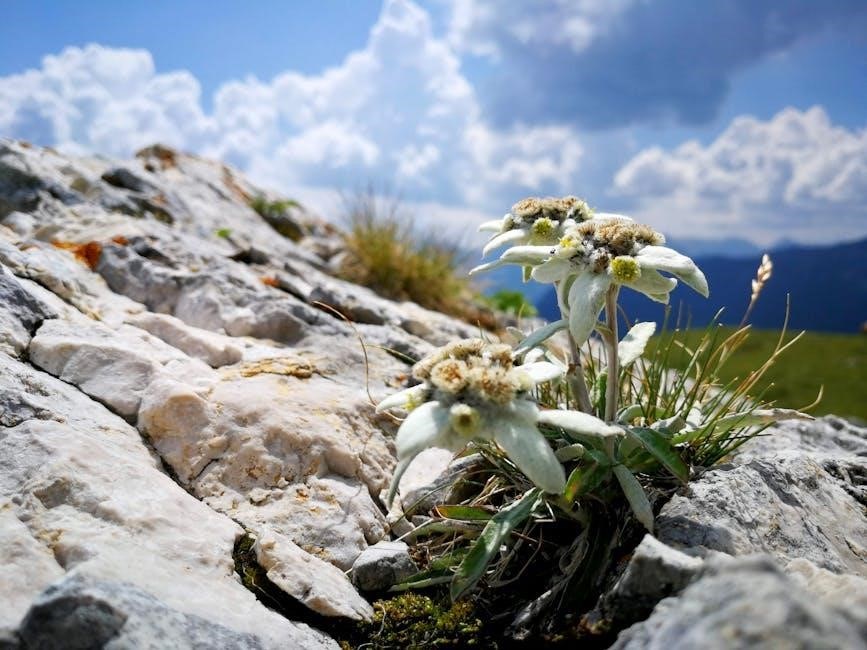
PDF guides often include photographic documentation of various Edelweiss species, supplementing textual descriptions. Resources like those found on 7dach.ru and logoslab.ru, while not exclusively focused on species differentiation, contribute to a broader understanding of Edelweiss diversity. These PDFs emphasize that while L. alpinum is iconic, numerous related species contribute to the genus’s resilience and ecological significance, requiring continued research and conservation attention.
Leontopodium alpinum (Alpine Edelweiss)
Edelweiss PDF resources dedicate significant attention to Leontopodium alpinum, the archetypal Alpine Edelweiss. These documents detail its morphological characteristics – the dense, woolly bracts surrounding small flower heads – and its adaptation to harsh alpine conditions. PDF guides often include detailed illustrations and photographs for identification.
Information sourced from botanical databases, compiled into PDF format, outlines the plant’s nutritional needs, as discussed on logoslab.ru, emphasizing its reliance on specific soil compositions and sunlight exposure. These resources also cover the plant’s life cycle, from seed germination to flowering and seed dispersal.
PDFs frequently explore the cultural significance of L. alpinum, referencing its historical use in traditional medicine and its symbolic representation of purity and courage. Documents like those found on 7dach.ru often blend scientific information with personal accounts of cultivation, offering practical advice for gardeners. These PDFs highlight the importance of conservation efforts to protect this iconic species from habitat loss and over-collection.

Other Edelweiss Species
Edelweiss PDF documentation extends beyond Leontopodium alpinum, cataloging a diverse range of related species. These resources detail variations in bract morphology, flower color, and habitat preferences across the Leontopodium genus. PDF guides often include comparative charts to aid in species identification, crucial for accurate botanical study.
While L. alpinum receives primary focus, PDFs highlight species like Leontopodium nivale (Snow Edelweiss) and others found in mountainous regions of Asia. Information sourced from botanical databases, compiled into PDF format, outlines the specific ecological niches occupied by each species, detailing their adaptations to varying altitudes and climates.
These PDF documents also address the conservation status of lesser-known Edelweiss species, often facing greater threats due to limited distribution and specialized habitat requirements. Resources, similar to those found on 7dach.ru, may include cultivation notes for these species, though success rates can vary significantly. The PDFs emphasize the need for continued research to fully understand the genetic diversity and evolutionary relationships within the Leontopodium genus.
Edelweiss Habitat and Distribution
Edelweiss PDF resources comprehensively map the geographical distribution of Leontopodium species, primarily focusing on high-altitude environments. These documents detail the plant’s preference for calcareous soils, rocky slopes, and alpine meadows, typically above the tree line. PDF guides illustrate distribution maps, showcasing concentrations in the Alps, Pyrenees, and mountainous regions of Central Asia.
Detailed PDF reports analyze the specific microclimates favored by Edelweiss, including aspects like sun exposure, snow cover duration, and soil drainage. Information sourced from botanical surveys, compiled into PDF format, highlights the plant’s sensitivity to environmental changes and its vulnerability to habitat loss. Resources often include photographic evidence of Edelweiss growing in its natural habitat.
Furthermore, these PDFs address the impact of climate change on Edelweiss distribution, predicting potential shifts in range and increased risk of extinction for certain populations. Similar to information found on sites like 7dach.ru, PDFs may also discuss successful conservation efforts aimed at protecting Edelweiss habitats and ensuring the plant’s long-term survival. The PDFs emphasize the importance of preserving these fragile alpine ecosystems.
Growing Edelweiss: Challenges and Techniques
Edelweiss PDF guides consistently emphasize the significant challenges associated with cultivating this alpine plant outside its natural habitat. These documents detail the plant’s specific requirements for well-drained, calcareous soil, full sun exposure, and consistently cool temperatures – conditions difficult to replicate in many gardens.
PDF resources outline various techniques for attempting Edelweiss cultivation, including seed stratification, seedling care, and the creation of artificial alpine environments. They often highlight the importance of mimicking the plant’s natural conditions, such as providing winter chilling and protecting against excessive moisture. Information sourced from horticultural experts, compiled into PDF format, details propagation methods and optimal growing media.
Furthermore, these PDFs address common issues encountered by growers, such as fungal diseases, pest infestations, and difficulties with flowering. Similar to discussions on 7dach.ru, PDFs may offer solutions and preventative measures. The PDFs often caution that successful Edelweiss cultivation requires patience, dedication, and a thorough understanding of the plant’s unique needs, acknowledging that it remains a difficult undertaking for most gardeners.
Propagation Methods for Edelweiss
Edelweiss PDF resources detail several propagation methods, with seed propagation being the most commonly discussed, though notoriously difficult. These guides emphasize the necessity of cold stratification – mimicking winter conditions – to break seed dormancy. PDFs often provide specific temperature and duration guidelines for successful stratification, typically involving several weeks of refrigerated storage.
Vegetative propagation, including cuttings and division, is also covered in these PDF documents, though presented as more challenging. Rooting cuttings requires specialized techniques and a consistently humid environment. PDFs sourced from horticultural societies often include detailed diagrams illustrating appropriate cutting methods and rooting hormone applications.
Furthermore, some PDFs explore micropropagation – tissue culture – as a potential method for large-scale Edelweiss propagation, though this is typically reserved for research or commercial applications. The documents frequently highlight the low success rates associated with all Edelweiss propagation methods, emphasizing the plant’s inherent difficulty in being multiplied. Like discussions found on platforms like 7dach.ru, PDFs stress patience and experimentation.
Edelweiss in Landscaping and Gardening
Edelweiss PDF guides frequently address the challenges of incorporating this alpine plant into landscaping and gardening projects. They emphasize the critical need to replicate its natural high-altitude environment, focusing on well-draining, rocky soil and full sun exposure. PDFs often detail specific soil mix recommendations, incorporating gravel and sand to ensure adequate drainage.

These resources caution against typical garden conditions, highlighting Edelweiss’s sensitivity to humidity and warmth. PDFs sourced from botanical gardens often showcase successful rock garden designs featuring Edelweiss, demonstrating appropriate plant placement and companion species selection. Discussions on creating microclimates – utilizing rock formations or raised beds – are common.

Furthermore, PDFs address the aesthetic considerations of using Edelweiss, noting its relatively small size and delicate appearance. They suggest using it as an accent plant rather than a focal point, and pairing it with other alpine or subalpine species. Information from sites like 7dach.ru, reflected in these PDFs, stresses the importance of realistic expectations regarding Edelweiss’s growth and flowering in non-native environments.

Edelweiss Nutritional Needs
Edelweiss PDF resources consistently emphasize that this plant is adapted to nutrient-poor alpine soils, making over-fertilization a significant risk. These guides detail that Edelweiss thrives in conditions where other plants struggle, indicating a low demand for rich soil. PDFs often warn against using standard garden fertilizers, which can lead to excessive foliage growth at the expense of flowering.
Information gleaned from botanical sources, compiled in these PDFs, suggests Edelweiss obtains essential nutrients from atmospheric deposition and the slow decomposition of organic matter in its rocky habitat. PDFs frequently recommend minimal supplementation, if any, focusing on trace elements rather than nitrogen, phosphorus, and potassium.
Resources like those found referencing logoslab.ru, within PDF formats, highlight the plant’s efficient nutrient uptake mechanisms. They suggest that a slightly acidic soil pH (around 6.0-7.0) optimizes nutrient availability. PDFs also caution that excessive moisture can leach essential minerals from the soil, further emphasizing the importance of well-draining conditions and careful watering practices when attempting cultivation.
Edelweiss and its Adaptations to Alpine Environments
Edelweiss PDF guides extensively document the plant’s remarkable adaptations to harsh alpine conditions. These resources detail its dense, woolly foliage, a key adaptation minimizing water loss in high-altitude environments exposed to intense sunlight and wind. PDFs highlight the plant’s ability to withstand extreme temperature fluctuations, surviving freezing nights and warm days.
Information compiled in these PDFs reveals Edelweiss’s compact growth habit, allowing it to hug the ground and avoid the strongest winds. The silvery-white hairs covering the leaves reflect sunlight, reducing overheating and UV radiation damage. PDFs often illustrate how these adaptations contribute to the plant’s survival in nutrient-poor, rocky soils.
Resources referencing sites like 7dach.ru, within PDF formats, emphasize Edelweiss’s efficient photosynthetic pathways, enabling it to thrive with limited resources. PDFs also explain the plant’s deep root system, anchoring it firmly in the unstable alpine terrain and accessing scarce water reserves. These documents consistently portray Edelweiss as a testament to evolutionary resilience.
Edelweiss PDF: Accessing Information and Resources
Edelweiss PDF documents are increasingly available online, consolidating information from diverse sources. As of September 1st, 2026, platforms like 7dach.ru and logoslab.ru serve as primary repositories, often linked within comprehensive PDF guides. These resources frequently feature high-resolution images, aiding in species identification and understanding morphological adaptations.
Accessing these PDFs often involves utilizing search engines with specific keywords like “Edelweiss cultivation PDF” or “Leontopodium alpinum guide.” Many botanical gardens and research institutions also offer downloadable PDFs detailing Edelweiss conservation efforts and research findings. PDFs sourced from news outlets, such as news.rambler.ru, may provide updates on Edelweiss-related studies.
Furthermore, specialized gardening websites and forums frequently compile lists of valuable Edelweiss PDF resources. These curated collections streamline the search process, offering a centralized location for accessing information on cultivation techniques, historical significance, and cultural symbolism. Always verify the source’s credibility when downloading PDFs to ensure accuracy.
Edelweiss Conservation Status
Edelweiss PDF reports, updated as of September 1st, 2026, indicate varying conservation statuses depending on the specific species and geographic location. While Leontopodium alpinum, the Alpine Edelweiss, isn’t currently classified as globally threatened, localized populations face significant pressures. PDF documents from botanical organizations detail these regional vulnerabilities.
Several PDFs highlight the impact of climate change on Edelweiss habitats, particularly the shrinking alpine zones. Increased tourism and illegal collection also pose ongoing threats, as documented in conservation reports available in PDF format. These reports often include detailed distribution maps and population estimates.
Accessing Edelweiss PDFs from conservation groups reveals ongoing monitoring programs and habitat restoration initiatives. These resources emphasize the importance of sustainable tourism practices and responsible collection policies. PDF guides also outline legal protections in place across different European countries. Further research, detailed in academic PDFs, focuses on genetic diversity and adaptation strategies to ensure long-term survival.
Threats to Edelweiss Populations
Edelweiss PDF reports, current as of September 1st, 2026, consistently identify several key threats to Edelweiss populations. Climate change emerges as a primary concern, with rising temperatures causing habitat loss as alpine zones shrink – detailed in numerous ecological PDFs.
Illegal collection remains a significant issue, driven by the plant’s symbolic value and perceived medicinal properties. Conservation PDFs document instances of poaching and the detrimental impact on localized populations. Increased tourism, while economically beneficial, also contributes to habitat disturbance and trampling, as outlined in tourism impact PDF assessments.
Furthermore, Edelweiss PDFs highlight the threat of hybridization with closely related Leontopodium species, potentially diluting the genetic purity of the Alpine Edelweiss. Pollution, particularly nitrogen deposition, also negatively affects soil conditions and plant health, as evidenced by environmental monitoring PDFs. These reports emphasize the need for stricter regulations and increased public awareness to mitigate these threats and ensure the Edelweiss’s survival.
Edelweiss Research and Future Studies
Edelweiss PDF documents reveal a growing body of research focused on the plant’s unique adaptations and potential applications. Current studies, detailed in scientific PDF reports, investigate the genetic basis of its resilience to UV radiation and extreme temperatures. These findings could have implications for developing stress-tolerant crops.
Pharmacological research, summarized in medicinal plant PDFs, continues to explore the bioactive compounds present in Edelweiss, with potential applications in skincare and anti-inflammatory treatments. Future research, as outlined in funding proposal PDFs, aims to assess the long-term impacts of climate change on Edelweiss distribution and genetic diversity.
Edelweiss PDFs also indicate a need for improved monitoring techniques to track population trends and assess the effectiveness of conservation efforts. Advanced genomic studies, described in research methodology PDFs, will be crucial for understanding the plant’s evolutionary history and identifying vulnerable populations. Collaborative research initiatives, detailed in project collaboration PDFs, are essential for ensuring the Edelweiss’s continued survival.
Edelweiss in Traditional Medicine
Edelweiss PDF archives document centuries of traditional medicinal use, particularly in alpine regions. Historical texts, available as scanned PDFs, detail applications for treating respiratory ailments like coughs and bronchitis, leveraging the plant’s purported anti-inflammatory properties. These PDFs often describe preparations involving the flowers and leaves, used in infusions and poultices.

Further Edelweiss PDF research reveals its use as a digestive aid, believed to alleviate bloating and stomach cramps. Traditional healers, documented in ethnobotanical PDF reports, also employed Edelweiss for wound healing, attributing this to its astringent qualities. However, these historical uses are often based on anecdotal evidence.
Modern scientific PDFs are now investigating the validity of these traditional claims, identifying compounds with potential therapeutic benefits. While not currently a mainstream medical treatment, Edelweiss PDFs highlight its growing interest in the cosmetic industry, where extracts are used for their antioxidant and skin-protecting properties. Cautionary PDFs emphasize the need for further research before widespread medicinal application.